
Starting and running a pub seems like a dream job. But what is actually involved from a business owner perspective?
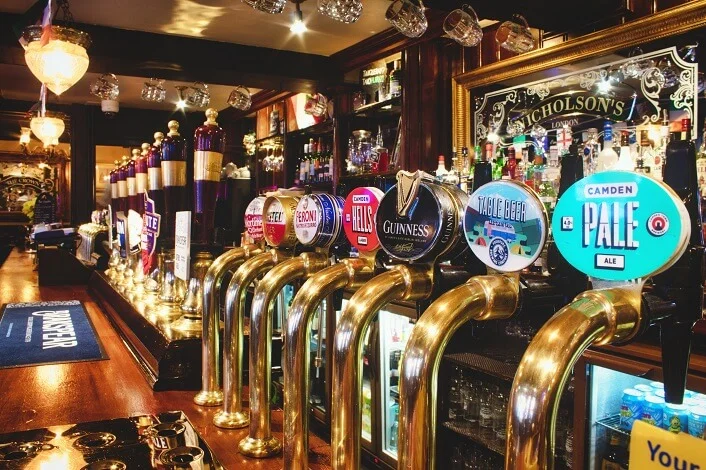
Sky high inflation may be coming down, but the cost of living crisis hasn’t abated, and the price of a pint is up across the nation. The British public won’t too easily be deterred from supporting their local, but UK pub owners are being hit at all angles by labour shortages, supply chain difficulties, and astronomical price increases in energy bills. Many have already been forced to close.
For new pub developers, this means caution as well as opportunity. Alongside an eager consumer base, there are also some ready-made premises to be snapped up and relaunched. But it’s not like the old days. The most successful pubs are now gastro or themed establishments that know how to cater for a modern clientele.
In this guide, we’ll explain what you need to know about starting a business opening a pub including choosing a location, agreeing a rent arrangement, picking a payment system, and getting an alcohol license.
- Before opening your pub, you must decide whether to open as a leasehold or freehouse.
- The cost of starting a pub can range from £20,000 to £120,000, depending on the model you choose.
- As a pub owner, you must have skills in people management and marketing, as well as financial knowledge and commercial awareness.
- Net profit is typically expected to be about 20–25% of your turnover.
- You must meet four licensing objectives: preventing crime, protecting children, ensuring public safety, and reducing public nuisance.
This article will cover:
What does running a pub business involve today?
The pub industry is one most us are familiar with, which is one reason why many people are tempted try to start a pub. In 2020, according to ONS data, there were 58 pubs per 100,000 people in the UK.
However, for the various national and regional lockdowns between 20 March 2020 and 4 July 2020 nearly all pubs, cafes and restaurants in the UK were closed.
During this time, the entire industry suffered as footfall declined and consumers stayed away. Some restaurants remained open for delivery and takeaway, but the industry was dramatically thinned.
How has COVID-19 changed the pub sector?
The accommodation and food service industry experienced the largest decrease in working hours of any industry, according to figures from the ONS. During lockdown, hours worked for restaurant employees were down 65% over 2019, compared with a 24% decrease for all other workers.
The chaos of lockdown and the changes caused by the coronavirus have created a challenging environment for the pub industry – but they’ve prompted some creative thinking, too. Pubs are becoming more ambitious, especially with the growth of pop-up bars, and customers become increasingly demanding, which can be healthy for profits.
In addition to this, the fact that over a billion pub meals are now served in the UK every year shows fewer people are now content just to go to the pub for a couple of pints of lager. So although the traditional pub is changing, pubs remain central to the British way of life. However, running a pub isn’t for the faint-hearted. If nothing else, it’s hard work.
John McNamara, chief executive of the British Innkeepers Institute (BII), says:
“In addition to requiring good people skills you will need to be extremely versatile as the job involves people management, stock management, financial management, catering, drinks knowledge, legal knowledge, marketing and customer service. The rewards, however, can be fantastic.”
As generations of retired footballers have found to their peril, being a pub owner requires commercial awareness and business knowledge. You’ll be managing a team of staff, so will also have to keep on top of employment law, management techniques and training.
You will also have to know about licensing laws, as well as health and safety and food hygiene.
If you dream of running your own pub, you probably already have an idea about what kind of pub you will be managing. With a greater variety of pubs than ever, your choice is whether yours will be a countryside-based local pub, a trendy, inner-city bar for a younger, night-time crowd, or one of the huge variety of businesses between these extremes.
Running a pub today means balancing lots of different business needs, including HR, sales and CRM. Luckily, project management tools can help you to automate many of the more time-consuming tasks, so you can focus more on running your firm.
Read our expert guide to learn more about the best project management tools for small businesses.
How do you choose a business model for your pub?
The most important decision to make before taking the plunge is whether to run a lease or a freehouse. The majority of pubs in the UK are not independently owned; with many being owned by a pub company; although the brewery-owned pubs are increasing as more open.
This makes running a leasehold the most popular option, as it is a much cheaper route into the pub business. You effectively buy the business, but not the property, and can sell it on that basis. You rent the pub from the pub company or brewery, with rent negotiated between you and your landlord, and then trade as a sole trader. You keep all of the profits of the pub, except that from games machines, which is usually shared between you and the pub company or brewery.
A leasehold can either be tied or free of tied. A tied leasehold means a considerable proportion of your drinks have to be bought from the brewery, so you can’t shop around to find the cheapest prices or particular brands you’d like to stock.
A tied lease is a popular first step into the pub market, says Richard Coltart, director of Richard Coltart Consulting and co-owner and director of pub company Who Cares Wins Ltd.
“A tied lease is a much cheaper option,” he says, “and is a good foot in the door. But it can lead to a struggle in the long term because you’re tied to the drinks you sell. This makes beer very expensive – you’re often making 20% less per pint in gross profit. That’s why many pubs are specialising food, or wine, or being children-friendly; the landlords are trying to keep sales away from beer.”
But, says Coltart, a tied lease can be a good stepping-stone to more independence:
“People take a tied lease, run it really well, make some good money, sell it for twice what they paid for the lease and then use that money to get a free of tie lease,” he explains.
A free of tie option provides the independence of a freehold without the cost, but is still more expensive than a tied lease.
If you decide instead you would rather have complete control and be a free-trader, you’ll need to put in much more investment up-front. You will have to buy the business and the property, making it the most expensive way to enter the trade.
However, you will be responsible for all decisions concerning the business, and you can make deals with whoever you like for products and services. You also have the long-term property appreciation. If you make a success of it, the rewards can be huge .
Before you start taking the first steps into acquiring a pub, it is crucial to draw up a business plan. A business plan is crucial to understanding what you want to achieve, how much money you have and what you can afford. And, of course, you’ll need to show a business plan to the brewery or pub company when applying for your pub.
As for the pub itself, in Coltart’s words, it’s a case of ‘location, location, location’.
“This is the most important thing to get right. Look what’s around you, the footfall, the competition, the transport, parking and general demographics.”
Also, make sure you get a proper survey of the building as this can save you a fortune later on, and ensure the building meets fire safety and environmental health regulations.
When it comes to starting a business, you can never plan too much.
To help formulate your pub business plan you may find it useful to download our free business plan template.
Pub start-up costs: How much does it cost to start a pub?
Tenancy costs start at around £20,000 and go up to £50,000. This pays for the fixtures and fittings and a deposit covering you if you can’t pay your drinks bill. The rent depends on the pub – its size, what type it is, whether it serves food and so on – but is generally estimated at about 12% of turnover.
The market is very competitive so it’s best to write out a business plan and consult a specialist lawyer before investing.
Buying a leasehold is complicated because the performance of the business will determine the amount you have to pay for the goodwill of the company. This will be negotiated with the previous leaseholder based on the accounts for the business in addition to the fixtures, fittings and stock. Prices can start as low as £30,000 but rise steeply for more successful pubs.
A tied lease is the cheaper option. The premiums on this type of lease, where you have to sell the drinks sold to you by the brewery, are lower or sometimes even non-existent.
“The premium on the lease depends on the state of the building,” Coltart says. “If it’s poorly decorated and needs a lot of work, there could even be zero premium, but you’d be spending up to £100,000 on doing it up.
“The ballpark figure you would need to invest is around £150,000 for a reasonably basic tied lease, or for an under-trading free lease,” he advises.
Remember that you’re not just paying for the premium on the lease, but all fees, stock and staff as well.
The most expensive option is buying a freehouse, which will include the value of the building, the fixtures and fittings and the business as a going concern. The cost of a freehouse is often around one and a half times its turnover and prices usually start at around £120,000. Prices can often be much higher than this though, as independent buyers compete with big pub companies. Coltart points out that in a major city, particularly London, the initial investment could be around £3m.
Once you’ve found a business you like, you’ll need to finance the purchase.
Most lenders will provide up to 70% of the price of a freehouse. Some of the rest of the funding needed can be obtained from a brewery loan but this would come with ties and may limit your ability to negotiate stock prices and develop the business as you wish.
You would then need £5,000 to cover incidental costs (legal fees etc.) and £10,000 for stock and as insurance against a low period, adding up to a total of around £50,000. As the size of the pub and the profitability of the business increase, so will the amount of investment.
“A strong track record in the trade will inevitably mean you are more likely to secure better start-up finance. ‘Do what you know’ is one of the basic rules for a business start-up and, statistically, experience increases the chances of success,” adds Andrew Turzynski, senior business manager at First National Commercial banking.
Once you’ve got your pub, as with any business, you need to make sure exactly what is eating into your revenues.
Wages, for example, can often be a big stumbling block for the unprepared, says Richard Coltart. “Wages will cost in the region of 20-25% of the exc. VAT turnover, including the manager. If you’re managing it yourself then it will be slightly cheaper.”
EPOS systems are the backbone of small business cash flow – they are crucial for managing cash transactions. Compare the best EPOS systems to find the top provider for your pub startup.
What Does Your Business Need Help With?
Get StartedWhat skills do you need for running a pub?
Landlords come from all walks of life. “Licensed retailing can give the right people (young and old, male or female) hugely fulfilling and varied careers; and if they prove themselves, they can be offered challenging responsibilities at an early stage,” says John McNamara of the BII.
The two essential qualities you need in order to run a pub successfully are business awareness and enthusiasm for the pub trade.
You should also get experience working in a local pub if you haven’t already had some. Not only does this give you a practical insight, it could also help you work out the type of pub that would suit you.
More important than your previous occupation are the skills you have and your personality.
“You have to be very social,” says Coltart. “It’s bloody hard work, the hours can be extremely long, but it’s great fun. There’s huge camaraderie with the customers and the staff.”
What rules and regulations are there for running a pub business?
To sell alcohol for comsumption on your premises you must have a licence. Following the 2003 Licensing Act, the licensing regime changed and the responsibility for issuing personal and premises licences rests with local authorities.
A pub must meet four licencing objectives: prevention of crime and disorder, protection of children, public safety, and the reduction of public nuisance. Designated premises supervisors are responsible for ensuring that the pub meets these criteria.
You must be over 18 years old, have no criminal record, prove that you are a ‘fit and proper’ person and understand your legal and social responsibilities.
Candidates are advised to hold a British Institute of Innkeeping (BII) National Licensee’s certificate.
Although this is not a guarantee of success, it will prepare you for the application. If you plan to develop the catering side, you will also need to contact the local environmental health department to ensure you meet their standards.
If you’re a newcomer to the industry you will also need training. The landlord will often run an induction course for people entering a lease. As well as covering the licence application, this will also introduce you to all the skills you need to run a business successfully, including legal skills; financial management; marketing; beer and cellar skills; and food hygiene. There are also training courses for experienced licensees.
How much can I earn as a pub owner?
Although many people love running a pub because of the lifestyle it entails, it’s also a business which can prove extremely lucrative.
John McNamara points out that pub businesses now have more opportunities to break the mold, providing opportunities for the creatively minded to yield increased profits:
“The change in the licensing means no longer are you tethered to the old system of shutting at 11pm or running a nightclub. Innovative ideas an be implemented to cater for different types of customers, lounge bars for after cinema or theatre drinkers, or even games bars for playstation buffs.”
The size of the pub will naturally affect how much money you can make, but in general the net profit should be around 20%-25% of turnover.
“For a tied lease that’s running reasonably well, you’d expect profits to be in the region of 20% of the total exc. VAT turnover,” says Coltart. “But if its for a free of tie lease, this is more likely to be around 25-30%. For some idea of profit on drinks, gross profit on draught beer should be around 50-55%, and 55-60% on bottled beer, if you’re running a tied lease. However, if you’re able to shop around for your drinks in a free of tie lease, it can be around 65-60% for draught or bottled beer.”
Owning a successful freehouse is where you can really rake it in. The profit will not be eaten up in rent, although you may have a large mortgage. And when you sell up, the growing strength of the property market means you can maximise your investment.
So what’s next? Software is an important first step when you’re looking to start a small business. Hospitality and leisure firms, in particular, rely heavily on EPOS systems to manage and enable cash transactions; here on Startups.co.uk we have a guide on to the best pub EPOS systems.
Our online comparison tool is also free of charge and has been designed to help you find the best deals and savings by giving you quotes from the top EPOS system providers in just one minute.


