
Pizza Express has opened its first QSR in Brixton, signalling a change among hospitality firms moving towards faster and convenience-focused dining.
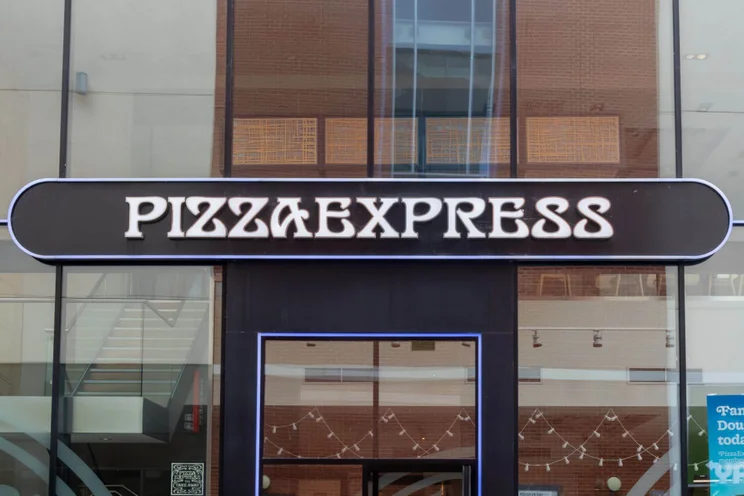
Italian food chain Pizza Express has recently announced the opening of its new “Quick Service Restaurant” (QSR) in Brixton.
The new site opened on Saturday, offering customers a self-ordering system for eating in, takeaway, and delivery.
The opening marks a noticeable change for the brand, moving away from the traditional sit-down restaurant experience and towards a faster and more convenience-focused model.
It also reflects a wider shift happening across the hospitality industry, as more restaurant businesses look at QSRs to cut costs, speed up service, and keep up with changing customer demands.
Pizza Express launches its first QSR in Brixton
On Saturday, Pizza Express launched its first QSR in Brixton, London – marking a shift for the casual dining brand as it experiments with faster and more efficient operations.
The new restaurant, which opened on a former LEON site, swaps full table service for self-order kiosks, a simplified menu (containing fan favourites like dough balls and the Sloppy Giuseppe pizza), and a setup that offers dine-in, takeaway, and delivery options.
The interior design features Pizza Express’s signature black-and-white stripes, as well as a dynamic lighting system that will also change throughout the day – moving from warm lighting during daytime trading to cooler tones as the evening sets in.
The move follows the success of the brand’s smaller-format restaurants in Hong Kong, which inspired the launch of its UK “Pod” concept in 2024, which now operates across three sites nationwide.
Further Pizza Express QSRs in Finsbury Park and Earl’s Court are expected to open in the following months.
What is a QSR?
QSR stands for “Quick Service Restaurant”, which refers to a fast food establishment that focuses on speed, convenience, and affordability. Some popular examples of a QSR are big names like McDonald’s, KFC, and Burger King.
Pizza Express aren’t the first casual dining restaurant to go down this route, as QSRs have seen immense popularity in the UK in the last few years.
According to statistics by Resos, 61% of all UK restaurants are limited service, and 94% of them are QSRs. However, just 28% of these are chains, meaning that independent operators still make up the majority of the UK’s quick-service market despite the dominance of major brands.
Moreover, branded QSRs represent over a third of turnover for food services, and market projection is expected to hit $48.56bn by 2031, making it the strongest performing segment in British hospitality.
What does this mean for small hospitality businesses?
Brands like Pizza Express dipping their toes into the QSR format may get the cogs whirring for smaller, independent hospitality ventures, especially for those jostling for position in an increasingly convenience-led market.
It may also prove to be an increasingly utilised way forward for restaurant businesses looking to expand to new sites without shouldering all of the costs needed to truly replicate their existing casual or fine dining experience.
Compared to traditional restaurants, QSRs typically require smaller sites, fewer front-of-house staff, faster table turnover, and simpler menus and kitchen operations. Much like food halls, which are bucking broader hospitality trends and actually growing in the UK, this kind of set-up can help reduce labour costs, improve service speed, and operate in high-footfall locations where larger restaurants may no longer be financially viable.
What’s more, the growing consumer demand for convenience and speed – particularly in city centres where takeaway and delivery services are more popular – could mean that serving your product in a “different way” may not have the same dilutative effects in terms of your core brand image that it would have five or ten years ago.
But with any move like this, there’s still some risk of losing what makes independent hospitality businesses stand out in the first place. There’s always the chance that some may struggle to maintain their brand’s personality and the customer experience that originally built up loyalty and connection in the first place.
The biggest challenges, however, will be competing with established chains that already dominate the market, particularly giants like McDonald’s and KFC that already have nationwide recognition and large marketing budgets.
All in all, it boils down to adapting to changing customer habits without being indistinguishable from the chains they’re competing against.

Discover the ales and ails of hospitality
Planet of the Grapes founder Matt Harris has over 25 years of experience in hospitality. Read his bi-monthly column for Startups now.


