

Learn how to create a cash flow forecast step-by-step and discover why it’s essential for managing your business finances, planning ahead and staying in control.

A cash flow forecast is a smart estimate of the money you expect to come in (such as from sales or customer payments) and go out (such as supplier costs, rent, tax and other bills).
While it’s not a crystal ball and won’t predict the future perfectly, it will give you a vital idea of what’s ahead. Will you have enough cash to cover your costs? Or is a squeeze coming?
Forecasts help you plan, make confident decisions, and avoid unwanted surprises – especially when times get tight.
Send a professional invoice with a payment link in under a minute.
No terminal, no chasing. Your client clicks, pays, and you're done, from any device.

- A cash flow forecast helps you plan by showing how much money is expected to come in and out of your business.
- This helps you manage finances, spot gaps in your revenue, and prepare for growth or seasonal changes.
- You should tailor your forecast to your audience: use cautious estimates for internal planning, and slightly more optimistic (but still credible and realistic) figures when presenting to banks or investors.
- You can use a simple spreadsheet in Excel or Google Sheets to get started. You don’t need fancy tools.
- Review and revise your forecast regularly, especially after financial changes, and create best- and worst-case versions to stay prepared for unexpected challenges.
On this page:
What is a cash flow forecast?
A cash flow forecast is a prediction of the money you expect to come into and go out of your business over a set period of time. It helps you to predict whether you’ll have enough cash to cover your expenses, including your own pay, and make informed financial decisions.
In the world of small business, having a basic cash flow forecast can really help an owner get the clarity they need, particularly when it comes to deciding whether they can afford a new monthly commitment, or investment in that new piece of equipment.
“It’s crucial as well for the owner to be able to predict if they can even afford their own level of pay!
“Factoring in future tax bills, even if they are just an estimate, can be a real eye-opener to what money is actually ‘free’ in the business!
“Whilst it’s best supported with a budget as well (which is a similar document), the cash flow is one of the most powerful tools for a small business owner, particularly when you feel things are not going well.

What are the benefits of a cash flow forecast?
A cash flow forecast is a vital tool for your business, because it can help you:
- Estimate when you’ll become profitable: forecasting your cash position over 12 months can help you identify when your business is likely to break even and start generating profit. This makes a cash flow forecast a useful tool for startups and new businesses.
- Support business planning and growth: even if your projections are based on estimates, they provide a useful foundation for setting goals and planning activities like marketing or the allocation of resources.
- Prepare for seasonal changes: if you know sales will spike or dip in certain months, you can adjust your spending accordingly, investing more when revenue is high and conserving cash during slower periods.
- Align spending with your business values: reviewing your forecast helps ensure you’re allocating funds to areas that support your long-term goals, such as staff development or customer experience.
- Enable realistic financial decisions: understanding your regular costs allows you to make more informed decisions.
- Maintain financial control: a forecast gives you visibility into your cash position, helping you to identify areas where you can reduce costs or increase investment, and ultimately avoid financial shortfalls.
Ideally, you should create a cash flow forecast along with any business plan you might create. It’s important not to put it off – you should do it right when you’re looking to start your business, so you have a clear idea of how much cash you’re likely to have at all times.
However, if your business is already up and running, but you:
- Feel like money is constantly tight for your business
- Need to make an important decision on whether to spend a significant lump of money (or commit to a monthly ongoing spend)
A cash flow forecast will especially helpful to give you a clearer picture of your financials and guide your decision making.
Who needs to see my cash flow forecast?
Cash flow forecasts serve different audiences. Internal versions should be more conservative, while versions for banks or investors can be more optimistic:
- If the forecast is for your own internal use, it’s wise to take a cautious approach. Use conservative estimates to build in a buffer for unexpected challenges and ensure you’re prepared for worst-case scenarios.
- If you’re sharing it with a bank, lender or investor, the tone may shift slightly to be more optimistic, presenting your business potential in a positive light (while still ensuring your figures are realistic!).
But no matter who your forecast is for, it needs to be accurate. Overly pessimistic or overly optimistic projections can undermine the credibility of your cash flow forecast. The key is to tailor your approach to the audience while ensuring your assumptions remain reasonable and well-justified.
How to create a cash flow forecast: step-by-step
A cash flow forecast typically includes:
- Your expected income (such as from sales and funding)
- Your outgoing costs (such as wages, operating expenses, and other business overheads)
To get started, all you need is a simple spreadsheet tool like Microsoft Excel or Google Sheets.
Step 1: Set up your spreadsheet
Use a platform such as Excel or Google Sheets to create a simple spreadsheet. Start by choosing your forecast period – weekly, monthly or annually. Generally, a 12-to-24-month range is usually realistic without becoming too speculative. If you’ve never tried cash flow planning before, you should at least try to plan a minimum of three months into the future.
Create a column for each time period and rows for income, expenses, and a final row for your net cash flow (income minus expenses). Use colour or formatting to make your totals easy to spot.
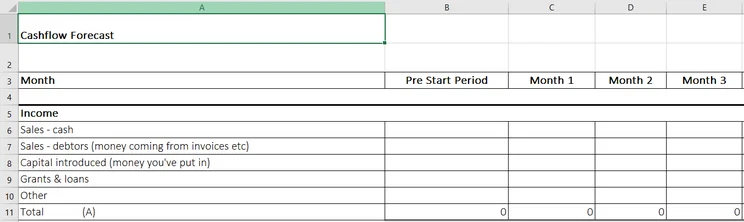
Step 2: List your income
Add up all expected sources of income. This might include:
- Sales revenue
- Savings or emergency funds
- Grants or loans
- Investments
- Dividends or interest
The total gives you your projected income for each time period.
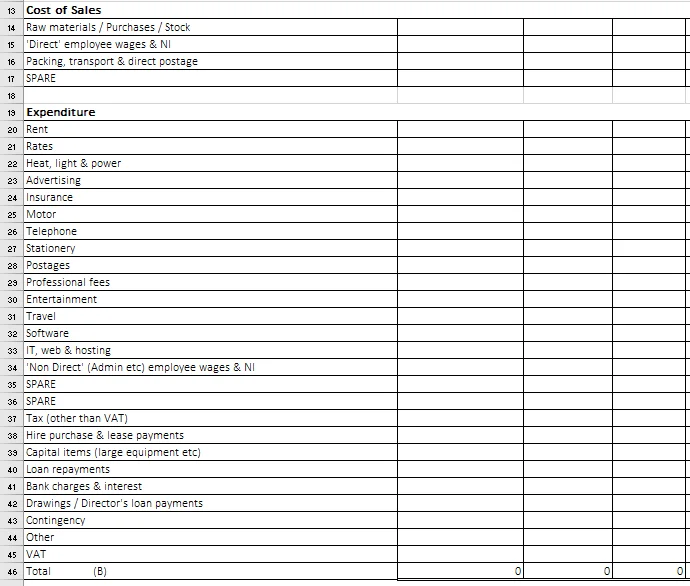
Step 3: List your expenses
Now add all anticipated outgoings, such as:
- Wages and labour costs
- Rent and utilities
- Equipment and supplies
- Training costs
- Debts and repayments
- Value-added tax (VAT), if applicable
This total shows your projected business costs.
Step 4: Calculate your net income
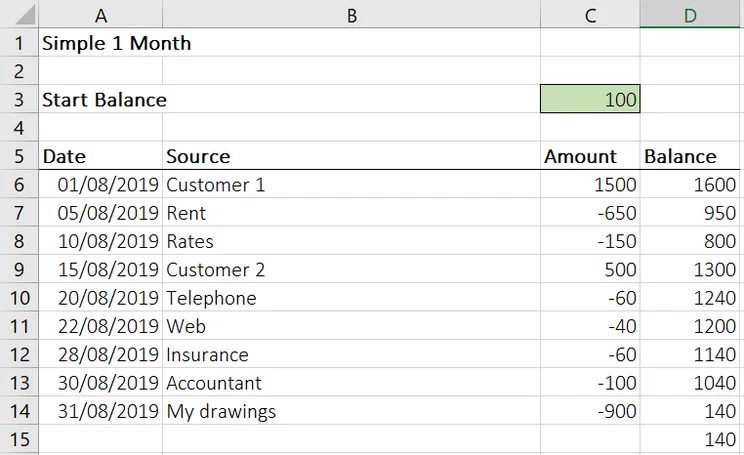
Subtract your total expenses from your total income for each period.
- If the net income result is positive, this indicates you’re cash flow positive: the total income exceeds total expenses for that period.
- If it’s negative, you’ll need to plan to cover the shortfall.

Tracking this over time gives you a clear picture of your business’s financial health. Plus, having this data on hand makes tax time far easier – you’ll already know the key figures and categories needed for your return.
Create cash flow forecasts for specific scenarios
Once you have created your cash flow forecast template, you could then create different versions for exploring different scenarios for your business. The easiest way to do this is to duplicate your existing spreadsheet tab into a new version, then test out different scenarios.
For example, you can use the duplicate tab to see what would happen if you received late payments, or if you decided to invest in new equipment before the close of the tax year.
Excel still remains the most popular option for creating a cash flow forecast among both business owners and accountants. However, there are specific tools and apps out there for creating cash flow forecasts.
An example of this would be Float, a cash flow app that can automatically sync up with accounting software like Xero, FreeAgent, or QuickBooks (all three of which made it onto our ranking of the best accounting software for the self-employed), and pull through your financial data to automatically create a forecast.
What are the common mistakes to avoid in a cash flow forecast?
There are some common pitfalls that you need to be aware of when creating your cash flow forecast, so keep in mind these five important “don’ts”:
1. Don’t forget about the small costs
These “invisible” costs refer to tiny outgoings you might miss, like a software subscription you might have forgotten about, or bank fees. Make sure to regularly review all your bank statements to make sure every outgoing, no matter how small, is accounted for (these small spends can add up).
2. Don’t be overly optimistic
It’s always important to keep a positive outlook as an entrepreneur – just don’t be unrealistic, as an overly optimistic look at your sales could lead to stress down the line. You should try to include a more conservative version of your cash flow forecast, so you don’t get caught in a cash crunch.
3. Don’t get your tax timelines mixed up
It can be easy to overlook the fact that VAT and Corporation Tax aren’t typically paid the exact moment a sale is made. You should ensure that you’ve correctly forecasted these tax payments for when they will leave your account, to avoid miscalculations.
4. Don’t forecast based on when sales are made
Your forecasts should be based on when money actually arrives in your account, not when sales are confirmed. Whether you’re waiting for payment after sending an invoice or you’re simply waiting for funds to be cleared and delivered by your payment processing provider, remember to factor in payment delays.
5. Don’t forget about seasonality
Many businesses will be affected by seasonal fluctuations in both revenue and expenses. Don’t just focus on annual performance; make sure you account for seasonal variations so you don’t get caught out by a surprise you could have seen coming.
Stop sharing your bank details over WhatsApp.
Go professional with the Startups Business Toolkit. Send invoices with built-in payment links in seconds and get paid the same day.
Once you’ve created your cash flow forecast, don’t just file it away to gather dust. Update it regularly, especially when your income or expenses change significantly, or there’s a significant change in the market.
A useful approach is to create two additional versions: one showing a best-case scenario and another showing a worst-case. This helps you prepare for unexpected challenges, like losing a key client or facing rising costs, and gives you a clearer view of how resilient your business really is.
What do I do if the outcome is negative?
If the outcome of your cash flow forecast is looking financially ugly, there are a few important steps you can take to get out of the red, including:
- Make it easier for customers to pay you: review your payment options to ensure you’re making it a simple process, and consider setting up “one-click” payment options for a speedier process.
- Plan when to pay your tax bill: while staying on top of your tax bills is absolutely critical, and you should never miss the deadline, just keep in mind that there isn’t a benefit to paying early.
- Keep on top of your credit: do your clients or customers have outstanding invoices? Make sure to chase up and gently remind your customers about any outstanding invoices you are due.
- Overheads: the money you spend that doesn’t directly relate to product sales, such as insurance, utilities, rent, and advertising. For example, if you run a pottery business, clay would be part of your cost of sales (COS), but your studio rent would be an overhead. In other words, your running costs. If you sell a service, all your costs are overheads.
- Cash inflow: all money entering a business. This is primarily from sales, but could also include tax rebates, business loans, or other outside investments.
- Cash outflow: the money that goes out of your business. Most of this will be either overheads (see above) or cost of sales (things you buy that are directly related to the things you sell).
- Gross profit: the amount of money that you make from sales, minus the cost of sales. In very simple terms, it’s the money you make from selling the things you make (or buy), minus the money you spend making or acquiring the things you sell. If, for example, a business made and sold wooden stools, the gross profit would be the total amount the stools sold for, minus the cost of the wood used to make them.
- Net cash inflow: your business is earning more than it’s spending – it’s making money.
- Net cash outflow: your business is spending more than it’s earning – it’s losing money.
- Cash flow vs profit: while profit shows how much your business has earned on paper, cash flow is the actual money moving in and out of your business. For example, you could make a sale tomorrow, but actually receive the cash from the client a month later. The distinction is an important one to understand, as your business could technically be in profit but still run out of cash.
In summary: why a cash flow forecast is key
Creating a cash flow forecast is one of the smartest things you can do for your business, giving you a clear view of what’s coming in and going out. You’ll be better prepared, more confident, and ready to make decisions that move your business forward.
It also means you’ll be confident in the knowledge you have enough cash for the present and immediate future, and if you face any unexpected setbacks. A cash flow forecast will also demonstrate if you have cash to grow your business, taking it to the next level.


