
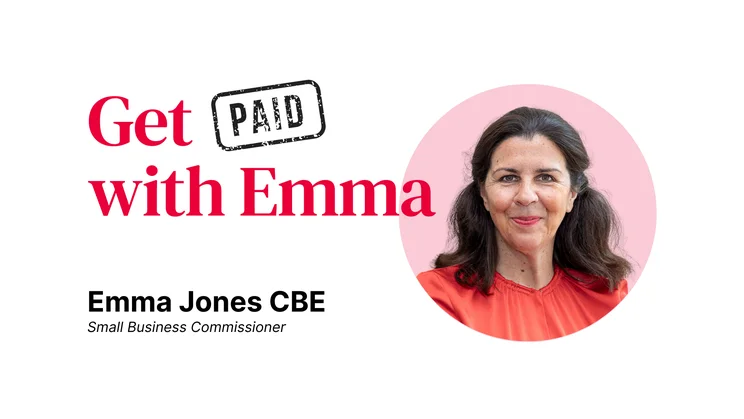
In an exclusive column, Emma Jones CBE discusses her work tackling late payment practices, offering practical insights to help small businesses get paid what they’re owed.
You’ve probably been on a training course recently, created and delivered by a sole trader who’s put time and effort into making something useful, engaging and informative.
Now imagine they received zero payment for it.
This happened to a trainer that contacted my office recently. The training agency that hired her to deliver the course simply couldn’t be bothered to adhere to the payment terms they’d agreed to, leaving them fresh out of time, resources and money.
Despite relentlessly contacting them, the invoice remained unpaid, and our client felt completely hopeless – until they sent us an email, that is.
When all else feels lost, we can help
After they reached out, the Office of the Small Business Commissioner attended to her case, and we resolved it almost immediately. Thanks to our prompt intervention, the sole trader got their money back, and the big business was held accountable.
But alas, this story has become far too familiar. Big companies can exploit the resources of their small business suppliers, privy to the fact that small businesses don’t have time or money to put up a fight. And they do, almost every day.
Fortunately, the up-and-coming Commercial Payments Bill will protect small businesses all over the UK, which will make late payments and circumvention of payment terms will soon be a thing of the past. It’s vital that you, as a sole trader or small business owner, know precisely what the law entails so you can use it to stabilise your cash flow.
New weapons in your arsenal
Once the Commercial Payments Bill passes, an interest rate of 8% above the Bank of England’s base rate can be applied to late payments and cannot be contractually excluded by big clients and suppliers. Hopefully that’ll make them think twice before letting an outstanding invoice go unnoticed.
If they dare, however, our strengthened adjudication team under the Commercial Payments Bill will be able to investigate them and issue fines to ensure that payment terms will never be circumvented again.
Should you ever find yourself in a sticky payment situation, remember that OSBC intervention is just an inquiry away. Investigating and chasing big businesses should never have to be the job of a small retailer.
Instead, you should:
- Confirm when you can expect payment, as terms like “30 days” may vary.
- Ensure your invoices are completed correctly and submitted through the agreed person/payment portal. If unresolved, get in touch with us.

Emma Jones CBE – Small Business Commissioner
Emma Jones advocates for SMEs in the UK, ensuring they receive the resources they need to grow. With a degree in Law and Japanese, Emma has spent the last 25 years founding and leading multiple ventures, including Enterprise Nation and StartUp Britain, before being appointed as the Small Business Commissioner for the Department for Business and Trade in June 2025.
This content is contributed by a guest author. Startups.co.uk / MVF does not endorse or take responsibility for any views, advice, analysis or claims made within this post.

