
Alan Milburn’s review aims to put young people in jobs, but Gen Z entrepreneur Adam Thornhill tells us why more support should be given to young founders.
- The newMilburn review is built around getting young people into jobs, with a Youth Opportunity Service and a bigger employer grant, but backing young founders isn’t a major focus.
- Gen Z isn’t waiting around: 56% want to start a business and “Founder” titles are up 280% since 2022, yet 7% of young entrepreneurs already rely on payday loans.
- Adam wants small grants and basic business workshops, and says to start small, work for free to prove yourself, and use AI as a sounding board.
Almost a million young people in the UK are not in education, employment or training (NEET) – a higher share than anywhere else in Europe bar Romania.
Alan Milburn’s final report, published today, lays out a ten-year plan to change that, built around new guarantees of education, training or work and an ambition to bring the NEET rate down to around 5%.
It’s a welcome step, but plenty of Gen Z aren’t waiting around. New LinkedIn research shows 56% have entrepreneurial ambitions, and the number of them adding “Founder” to their profiles is up 280% since 2022.
I spoke to 27-year-old entrepreneur Adam Thornhill, who thinks young founders need more support, from small grants to basic business workshops, to give them a fighting chance of succeeding.
Below, we break down what’s in the report, whether it goes far enough to back Gen Z’s entrepreneurial spirit, and what young founders can do in the meantime to take matters into their own hands.
13.5% of young people are NEET. Here’s what the review says to do about it
According to Alan Milburn’s new report, From a Welfare State to a Working State, which sets out a ten-year plan to get young people into learning or work, one in eight 16 to 24-year-olds in the UK is NEET, and it’s a problem that has stubbornly refused to budge.
The rate has barely dipped below 10% in 25 years. Most of those affected are economically inactive rather than looking for work, and six in 10 have never had a job. Left alone, the review says it could hit 16.3% by 2031, or around 1.27 million young people.
Alan Milburn’s final report argues that tinkering won’t cut it. At its heart is a new Youth Opportunity Service, giving young people a named adviser and a personal plan, alongside a legal guarantee of education, training or work for 18 to 24-year-olds.
Employers can already claim £3,000 through the government’s Youth Jobs Grant, part of the Youth Guarantee, for hiring someone out of work for six months. Milburn wants to expand it, with up to £5,000 for firms with fewer than 50 staff and up to £7,000 for those hiring young people facing bigger barriers.
It won’t come cheap. It’s projected to cost £500m in 2027/28, and rise to £5.8bn a year by 2036/37. But by then, welfare savings and extra tax revenue are expected to cover the cost. The review’s modelling suggests that it would cut the NEET rate to 6.8% by 2036. That’s short of the 5% target, but still a big drop from today’s 13%.
That’s a long wait, though, and plenty of young people aren’t sitting it out.
Meanwhile, new research shows 56% of Gen Z want to start a business
For many younger applicants, the answer to a tough job market isn’t waiting for a guarantee. It’s creating their own job. New LinkedIn research shows 56% of Gen Z have entrepreneurial ambitions, and the number adding “Founder” to their profiles is up 280% since 2022.
AI is appearing to play a huge role in democratising entrepreneurship. LinkedIn found 93% of UK small business owners surveyed use it, and Andrew Monu, UK Country Manager at LinkedIn, says technology is “lowering the barrier” to turning ideas into businesses. Yet, he stresses it’s only part of the picture, as relationships and reputation still decide who succeeds.
The Milburn report points the same way as LinkedIn’s research. It says one in six 18-to-29-year-olds were engaged in early-stage entrepreneurial activity in 2024, up from just 5% in 2009. That’s a big shift in 15 years, and it comes as the review finds youth employment has fallen even as overall employment has risen.
But despite the helping hand of AI, starting out isn’t easy. The report notes that 7% of young entrepreneurs use payday loans, a sign of how little financial cushion many have when they take the leap. For a generation facing a tough job market, going it alone can feel like the only route on offer, but without funding or guidance, the cost of getting it wrong can be steep.
Despite this, backing younger would-be founders doesn’t seem to be a major focus for the NEET plan, which centres on getting young people into education, training or work instead.
So, with many younger workers feeling squeezed out of the job market, and facing barriers when starting their own business, what would actually help?
First chances: what a 27-year-old founder wants for the next generation
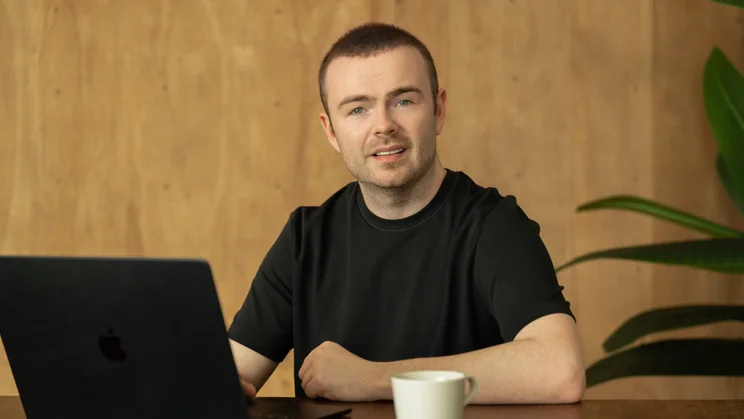
British-born entrepreneur Adam Thornhill, 27, started his first business at 17 and now runs two companies: Relate, which helps founders launch and run businesses overseas, and real estate investment firm L5 Properties.
He says the lack of entry-level roles is pushing more young people the same way: “If you keep applying for jobs and getting nowhere, you start thinking about what you could do on your own.” His own hurdle was being taken seriously, so he did some work for free at Relate to learn and prove himself.
What Adam wanted from the report was simple: more apprenticeships, employers willing to give young people a first chance, and “a small grant” for would-be founders. On the first two, it delivers, with a legal guarantee of education, training or work and £3,000 for employers who hire someone who’s been NEET for six months.
For founders, it’s thinner. There’s up to £500 to test an idea and a £3,000 grant, but only for those who’ve already had specialist help validating their proposition, and that “specialist support” isn’t spelt out as the practical basics Adam asked for.
The 18-month start-up period is only something the government “should consider”, even though 7% of young entrepreneurs already use payday loans.
So, ultimately, the plan is far stronger on getting young people into jobs than on helping them create their own. Until that changes, Adam has advice for anyone who doesn’t want to wait.
Whether you’re still at school or fed up with job applications, here’s how Adam says to get going.
- Start small: If you have an idea you’re excited about, try to get your first paying customer while you’re still in school.
- Be willing to work for free: Adam did unpaid work early on to learn and show people what he could do.
- Get the basics down: Even a short workshop on what to charge and how to find your first customer gives you somewhere to start.
- Use AI as a sounding board: If you have no one to ask, try questions like “What costs am I forgetting?” or “What should I say when I get in touch with my first customer?”


