
From a blockchain pivot to a US regret, Mike shares what raising money really taught him, and what he’d tell founders just starting out.
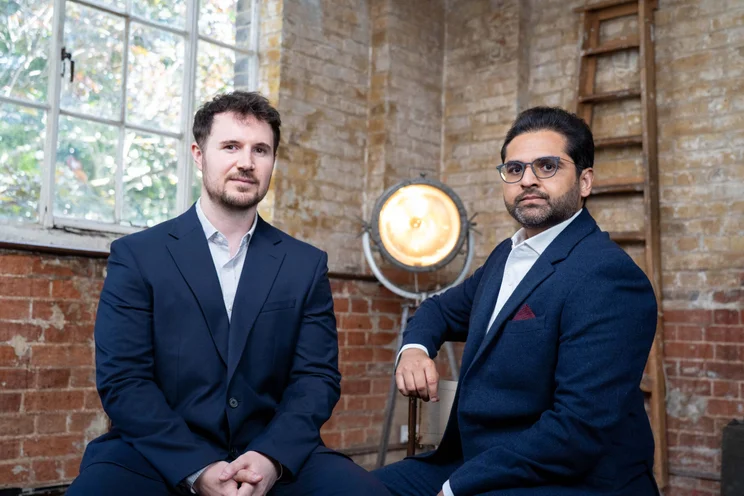
- Mike logged more than 300 rejections from a database of 6,000+ investors before landing three funds. He says fundraising never really stops.
- After the FTX scandal, Stoa came close to shutting down. Mike and his co-founder pivoted from idle stablecoins to idle cash, and a senior banker offered £100,000 if they built it.
- Mike’s biggest regret is not registering in the US first and raising on a SAFE, citing a “halo effect” for founders, a unified market, and more risk capital.
- His tips for new founders: choose your lane early, test demand before you build, start with what you’ve got, and be picky about feedback.
Hearing “no” once is a knock. Hearing it more than 300 times is enough to make most founders pack up. Mike Saraswat heard each one, logged it, and moved on to the next investor.
As founder and CEO of Stoa Money, the fintech that lets people lock up their cash in exchange for perks upfront, he pitched his way through a database of 6,000 investors before landing three funds.
Along the way, he watched his original blockchain idea collapse alongside FTX, rewrote his pitch deck from scratch, and learnt why he should have registered in the US from day one.
I sat down with him to find out what kept him going, the near-death moment that changed Stoa, and the advice he’d give founders facing a wall of rejections.
Counting the nos: how Mike pitched his way to three funds
Mike tells us his approach to fundraising was part science, part stubbornness. Over time, he built a database of more than 6,000 investors and kept a record of every “no” along the way.
By his count, that came to over 300 rejections, around 70 to 80 “keep in touch” replies, 12 or 13 angels and, finally, three funds. He says he has the screenshots to prove it.
His takeaway? Fundraising never really stops. Money, he says, “gravitates towards confidence”, so you need “blind conviction” that you’ll make it happen. With no product or customers to show, he emphasises why investors should back him as a founder, arguing that “at the very early stage, it’s really you.”
Pitching isn’t the be-all and end-all, though. Mike met one angel at a Tim Ferriss fan meetup, a senior investor from Fuel Ventures at a founders’ lunch, and a New York-based co-lead at a lawyers’ get-together. The New York investors gave him two hours, then co-led the round with a smaller cheque, which helped others follow. Mike’s view is that you “got to increase the surface area of luck”.
He doesn’t take a no and keep walking, either. After meetings, he asks investors for their gut-feel reason for not investing, which tends to bring honest feedback quickly. If they’re lukewarm, he sends progress updates, such as an event he’s presented at or a useful conversation, rather than chasers.
Persistence, Mike believes, shows investors who you are.
The near-death moment that rewrote Stoa’s business plan
Stoa’s story could have ended in 2023. Mike and his co-founder, Sam, had set out to put government bonds on the blockchain, starting with pound-backed stablecoins.
Then the FTX scandal broke, and appetite for anything blockchain-related evaporated, including among the central banks they were speaking to.
“We had this near-death moment,” he tells me. In autumn 2023, the pair had to decide whether to shut down or rework their pitch deck and see if a new proposition landed with investors. They chose the latter, pivoting from idle stablecoins to idle cash.
The reworked deck pitched a Venmo-style peer-to-peer payments app, but one idea on slide 11 or 12 stuck: deposit your money to get things instead of interest. After emailing and messaging 70 to 80 potential investors, two or three got back, including the senior banker who offered £100,000 if they built it.
Mike now calls the pivot “a blessing in disguise”, arguing that only a small minority understand blockchain, while traditional money is where most people need help. To test the idea, he and Sam ran over 250 surveys and built a waiting list of about 4,000 people.
Even Mike’s dad was put to the test. The ex-banker turned down 7% interest on £10,000, but warmed up when Mike offered to cover his pet insurance instead. Today, Stoa pots work the same way: they lock up cash for 12 months and give customers vouchers or other perks upfront.
Playing it SAFE: why Mike’s biggest mistake was not registering in the US first
Asked what he’d do differently, Mike’s answer was immediate: “register the company in the US”.
He’d also raise his first couple of million on a Simple Agreement for Future Equity (SAFE). Popularised by Y Combinator, it lets investors put cash in now and receive shares later, once a bigger investor values the business. Mike’s advice is to keep it simple: put a cap on it, don’t set a company valuation, and avoid overcomplicated rounds.
Stoa used a UK equivalent, SeedLegals’ Seedfast, but still had to put a valuation on the company. Mike says a US base creates a “halo effect” for UK-launched tech businesses, and that valuations, dilution and round sizes all look different to investors.
The market is the other draw. Europe, he says, is fragmented, while the US is one unified market, with more risk capital and faster-moving legal systems. By his maths, winning 1-3% of a US market segment can make a company worth $10bn to $20bn, whereas in the UK you’d need 15-20% domination.
That doesn’t mean leaving the UK behind. Mike would still launch here, but points to Cleo, which took its business to the US early on, as proof of the gap. “It’s not the people, it’s the ecosystem that’s not really supporting us here,” he says.
His fix? Top-down capital allocation, with more risk money going into pre-seed, seed, and Series A startups rather than established growth companies.
Having been through the wringer himself, Mike has plenty of advice for founders just starting out. Here’s what he’d tell them.
- Choose your lane early – Decide whether you’re building a lifestyle business or a hypergrowth one. According to Mike, it’s one of the few things founders can control, and chasing hypergrowth means being ready to give up evenings and weekends.
- Test demand before you build – Don’t assume people will buy. Use surveys, waiting lists, and different landing pages to see what resonates, then ask whether customers would stop paying if you didn’t solve their problem, or start paying if you did.
- Start with what you’ve got – Don’t wait for funding, a finished product or perfect conditions. Mike’s tip? Film ten people reacting to your idea, clip the footage together, and send it to a handful of investors on LinkedIn.
- Be picky about feedback – Everyone has an opinion, but not all of it deserves action. Focus on the feedback that will move the needle commercially, and let the rest go.
For more on getting funding right, follow Pioneering People founder Rita Kastrati’s Dispatches from the Funding Frontline column.


