
The FSA is pushing ahead to authorise lab grown meats, as UK startups furiously innovate to compete globally.
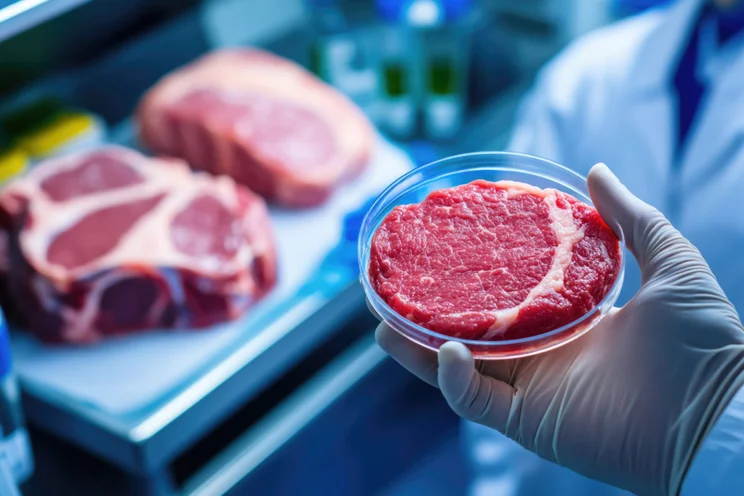
Meat, dairy and sugar grown in a lab could be on sale in the UK for human consumption for the first time far sooner than expected. In fact, it could appear in fridges across the country by 2027.
The Food Standards Agency (FSA) is looking at how it can speed up the approval process for lab-grown foods. It predicts it will be able to assess two lab-grown foods within the next two years.
UK startups are likely to be a driving force for innovation, as hospitality firms struggle with the rising costs of “home-grown” meat products and wrestle with the environmental implications of imports.
Beefing up investment
The Government has pumped £38 million into creating a national centre where R&D into alternatives proteins can take place. According to Green Queen, it has also invested £15 million into the research taking place at this future food hub, as part of its net-zero emissions strategy.
UK startups are already making a name for themselves in this area, keen to get ahead in what could be a huge growth area. This is not only because of concerns about the ecological impact of the cattle industry but because more people are choosing to be selective about both where their meat comes from and how often they eat it.
The Green Alliance states that the global alternative proteins market could be worth £226 billion by 2035. It has published its own analysis, which suggests that the UK industry could be worth up to £6.8 billion annually and create 25,000 jobs by 2035.
Home-grown talent
The UK has some of the highest food quality and safety standards and so has been slower to give lab grown proteins the green light than some other nations.
Professor Robin May, the FSA’s chief scientist, told BBC News: “We are working very closely with the companies involved and academic groups to work together to design a regulatory structure that is good for them, but at all costs ensures the safety of these products remains as high as it possibly can,” he said.
However, ventures are innovating so that when the FSA does finish developing its new regulations, they will be ready.
Hoxton Farms was founded by a synthetic biologist and machine learning expert. It has set out to make the UK’s first cultured-fat plant, and now has a 4,000sq ft pilot facility.
Another entry in the Startups 100 list is Better Dairy, which set out to tackle the shockingly high carbon footprint of dairy products. The team uses a process known as precision fermentation, which involves reprogramming microorganisms to manufacture casein. This is an important milk protein from which the company can make cheese and milk.
What is happening elsewhere?
The push for what the science minister, Lord Vallance, calls “pro-innovation regulation” will see products appear in UK shops sooner than predicted; but the UK is still being accused of dragging its feet.
Other countries are years ahead. Singapore became the world’s first nation to give lab grown meat approval and now it is stocked in shops across the country. The US followed in June 2023, with two companies – Upside Foods and Good Meat – getting regulatory approval from the US Department of Agriculture.
In Europe, the Dutch are leading the pack, according to Green Matters. However, steps have been more tentative in the UK. Dog food made from meat grown in factories was only made available last month.
However, the FSA insists that safety is paramount. As Professor May told BBC News: “It can be quite complex, and it is critical that we understand the science to make sure the foods are safe before authorising them.”


