
Widespread disruption across the TfL network is deterring people from visiting London, leaving restaurants, pubs and bars facing sharp losses.
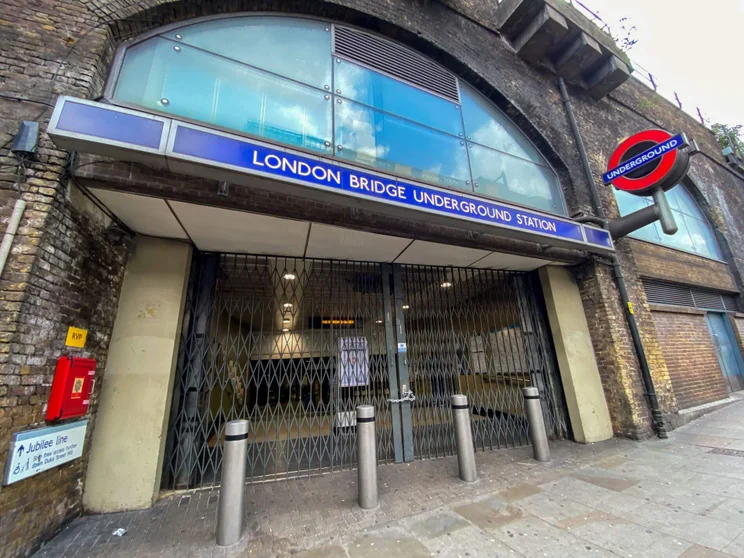
Travel across the city of London has fallen into chaos this week, as strikes held by Transport for London (TfL) have resulted in severely disrupted services across the entire tube network.
Naturally, this has made people think twice about visiting the city this week, but hospitality businesses are expected to be hit particularly hard by strike action, with UKHospitality warning that it could lead to a 40% drop in revenue for local restaurants, pubs, and bars.
This comes seven months after a tube strike hit the city last year, which is estimated to have cost businesses up to £110m – showing the real impact businesses take when industrial action occurs.
Why are TfL workers striking?
Members of the Rail, Maritime and Transport (RMT) union are striking over TfL’s voluntary proposal to allow train operators to work four days a week.
The RMT argues that drivers’ working hours would be reduced from 36 to 35 hours, but they would work longer shifts on the days they work, which could risk driver fatigue and potentially risk safety.
While the union has tried to negotiate a 32-hour work week over four days, TfL has rejected these proposals, saying that drivers don’t have to take up the four-day week offer and could remain on a five-day working week if they want.
Further strikes are also planned on 19th-21st May and 16th-19th June unless an agreement is reached between both parties.
Hospitality businesses brace for sharp revenue losses
Severely disrupted services mean that thousands of commuters and visitors are unable to travel across the capital, deterring customers from visiting local hospitality venues.
As a result, leading trade body UKHospitality warns that pubs and restaurants could face a 40% decline in revenue.
“Tube strikes have a devastating impact on London’s hospitality businesses.” Kate Nicholls, chair of UKHospitality, told CityAM.
“Commuter footfall is almost non-existent and families cancel plans to visit the capital. The cost of strikes can stretch into the millions – as we saw when strikes hit the sector a couple of years ago.”
This comes as another blow to hospitality businesses, which have already been facing a wave of difficulties this year, including increased business rates, higher alcohol duties, new National Minimum Wage (NMW) rates, and surging energy prices driven by the ongoing conflict in Iran.
Moreover, new data reported by The Morning Advertiser reveals that insolvencies within the food and accommodation services sector have increased by 22% month-on-month – another concerning figure for an already struggling sector.
How should businesses respond to strike disruption?
Hospitality businesses can’t stop tube strikes, but they can soften the blow.
Specifically, with central London losing its usual office crowd, businesses should change their focus to nearby residents, such as with tailored promotions and walk-in deals. Appealing to a more local audience can help businesses stand a better chance of maintaining a steady customer base despite the disruption.
Simple communication also goes a long way. As a lot of the damage happens before the strike (people tend to cancel plans as soon as disruption is announced), businesses should use social media, email and their website to reassure customers that they remain open and accessible. Sharing alternative travel suggestions can also help maintain confidence and encourage customers to follow through with their plans.
For staff that may have trouble getting into work, businesses should plan ahead by adjusting rotas to reflect lower demand, scheduling shifts earlier, and maintaining clear communication with employees about travel options.
Lastly, with fewer people out and about, it’s worth leaning more on delivery options to stay connected with customers choosing to stay at home. Promoting takeaway deals and pushing online orders is a simple way to keep sales coming in and staying on people’s radar, even when footfall drops.

Discover the ales and ails of hospitality
Planet of the Grapes founder Matt Harris has over 25 years of experience in hospitality. Read his bi-monthly column for Startups now.


