
Counting notes, skipping lunch breaks, cash is costing small business owners more time than they realise. So why won’t they go cashless?
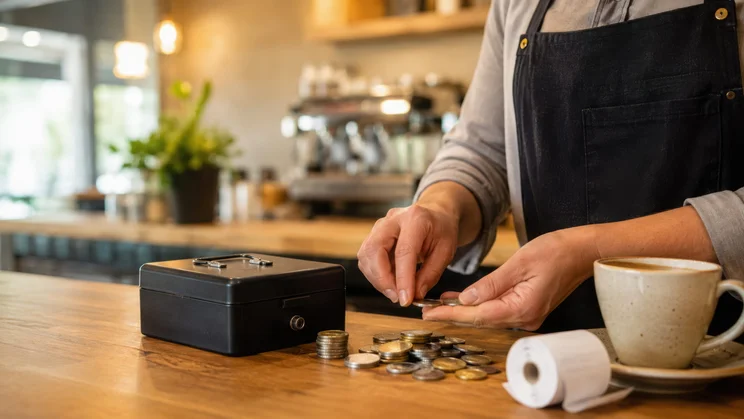
- Cash admin costs small business owners 22 working days a year, split between counting takings and trips to the bank
- The inconvenience has real knock-on effects, with 70% having delayed banking their earnings, leaving over 60% keeping cash at home or on their person
- Seven in 10 still see cash as essential, largely because a significant share of their trade depends on it
As it turns out, cash is still king for most small business owners, with the average proprietor spending more than three weeks a year on cash-related admin, from counting cash to travelling to deposit money – more than enough time for that holiday they keep putting off.
This is according to a new survey, which also found that a third of small business owners have to forego lunch breaks to get the money banked before closing time. Despite this inconvenience, however, the majority of small business owners aren’t willing to go cashless.
So, is the penny really not dropping for small businesses, or is the rush towards a cashless society overblown? We explore why business owners are reluctant to cut ties with cash in 2026, and what they can do to reduce the admin associated with it.
The hidden cost of handling cash
The research from the Post Office, which surveyed 500 small business owners, sole traders, and people running side hustles, found that nearly three and a half hours a week go on jobs like counting cash alone, totalling more than 178 hours a year.
On top of the counting, there’s the travelling. One hour a week is typically spent taking money to the bank, with business owners depositing an average of £1,738 in cash each week.
It’s a task that 60% find inconvenient to fit around everything else running a business demands, and for some, it’s enough to disrupt the working day entirely: 13% have had to close their premises early just to bank their takings before closing time, while a third have skipped a lunch break to do the same.
That inconvenience has knock-on effects, too. Around 70% of those surveyed said they’d postponed depositing their earnings because of time constraints, which meant keeping the cash at home (61%) or carrying it on their person instead (26%) – hardly the most secure options for a business’s takings.
For some business owners, cash admin has actually pushed them away from embracing card payments. Almost a quarter (24%) said the extra admin involved was what stopped them from accepting more card payments or moving further towards digital transactions.
Taken together, the survey shows that the cost of cash is bleeding into time, flexibility, and, in some cases, security. So aren’t business owners moving to ditch physical money altogether?
Why businesses aren’t rushing to give up cash
Despite the admin burden, most small business owners have no plans to go cashless. Seven in 10 still view cash as king, and it’s easy to see why. SME owners estimate that 29% of the payments they receive are in cash, and 58% say their business would struggle if they only accepted cards.
There’s also a growth incentive tied up in keeping cash accessible rather than abandoning it altogether. Seven in 10 of those surveyed believe more convenient, accessible ways to deposit notes would help their business expand, while 67% say it would boost their trading opportunities.
For many small business owners, especially those serving older and less tech-savvy demographics, cash remains too valuable to lose, and scrapping it altogether could mean alienating some of their most loyal customers.
In other words, the appetite isn’t to ditch cash – it’s to make handling it less of a drain. Fortunately, there are ways business owners can shave down the admin without ditching physical tender.
- Batch your counting and banking – Set fixed times for counting takings and depositing them to cut down on the time lost switching between tasks
- Use a nearby deposit point – Services like the Post Office’s cash deposit accounts let you bank takings locally without a special trip to a branch
- Reassess your cash-to-card ratio regularly – Know what proportion of trade is genuinely cash-dependent, to help you decide where digital tools are worth adding


