
YouGov has released new research which reveals how ‘money muteness’ is causing UK small businesses to willingly lose 10% of their annual revenue.
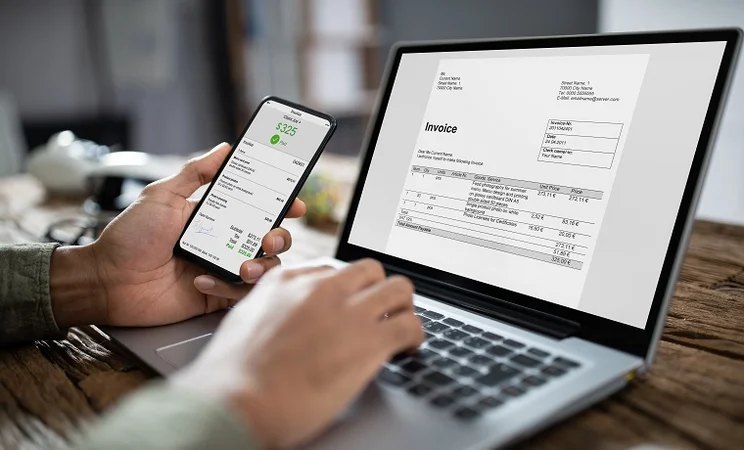
When you’re a small business owner, late invoices can have a huge impact on revenue. You can spend months waiting for clients to pay you the money you are owed, playing havoc with your company’s cash flow.
Now, new research from YouGov has revealed that more than 7 in 10 UK SMEs would willingly forgo money to avoid chasing customers on payments – blaming the so-called ‘money muteness’ taboo in British society.
The research, conducted on behalf of global fintech GoCardless, surveyed over 1,000 SME decision makers, found that the stigma attached to talking about money has left small businesses vastly underpaid.
The findings indicate 29% of SME leaders feel uncomfortable asking customers for payment and nearly three-quarters (73%) are willing to forgo up to 10% of their annual turnover to avoid an awkward money conversation.
However, small business leaders also seem to recognise that ‘money muteness’ places a ceiling on their success. 20% of SME decision makers said they would have more time to think about their long-term strategy and growing their company, while 18% would invest in other parts of their business.
So what can small businesses do to fix the problem?
Technology could hold the answer
While the general consensus of the respondents seems to show that conversations about money should be avoided, the research also indicates that small business owners think technology is the best route forwards to minimise ‘money muteness’ on both sides.
62% of consumers agree they would feel more comfortable getting chased for a late or failed payment by an automated message, for instance on email or text, rather than a call or notice from a human being
Want a system that can handle awkward customer interactions for you? CRM systems are a great way to manage your customer relationships and make sure all your payments are up to date. Read our guide to the Top CRM systems for small businesses to find out more.
Female entrepreneurs are losing out most
The research also shows that the gender gap in entrepreneurship remains an influencing factor in conversations about money, with female business leaders appearing disproportionately affected by the money taboo.
32% of female respondents said that they feel awkward talking about money, compared to only 22% of men. Reasons for this disparity could be due to stereotypes expecting women to be more polite and submissive than men. When dealing with customers over half (54%) of women say it’s because they don’t want to be seen as rude, in contrast to 40% of men.
As part of the research, GoCardless partnered with Emma Gannon, award-winning author of The Multi-Hyphen Method and host of careers podcast, Ctrl Alt Delete, to raise awareness of the issue and get small businesses talking more openly about money.
Gannon said: “Money is an emotional topic as it is, but add in the problem of late payments and it’s even more stressful. Chasing payments causes a huge expenditure of emotional and mental energy and has affected almost every single freelancer I know. Research tells us women worry more about being seen as rude or could sometimes feel intimidated, which means they’re at a greater disadvantage. Small business owners and solopreneurs deserve more respect, and they deserve to be able to do their work without having another job on top. Late payments are a massive problem, and it is a scandal how normalised they’ve become. I’m really excited to be working with GoCardless to raise awareness of this problem, but more importantly, to offer solutions.”
Commenting on the research, Pranav Sood, VP Small Business at GoCardless, said: “You can’t fix a problem if you don’t talk about it. Getting paid is one of the biggest problems that SMEs face and an inability to talk about it is holding too many businesses back.
“At GoCardless, we are committed to breaking this taboo and tackling ‘money muteness’. The first step is to recognise that it’s normal to feel awkward when talking about money. But that isn’t enough – to solve this problem for good, SMEs will need to adopt technology and processes that automate collection and eliminate late and failed payments.”


