
Experts warn raising the minimum wage beyond £13 an hour could cost jobs, raise prices, and lock more young people out of work.
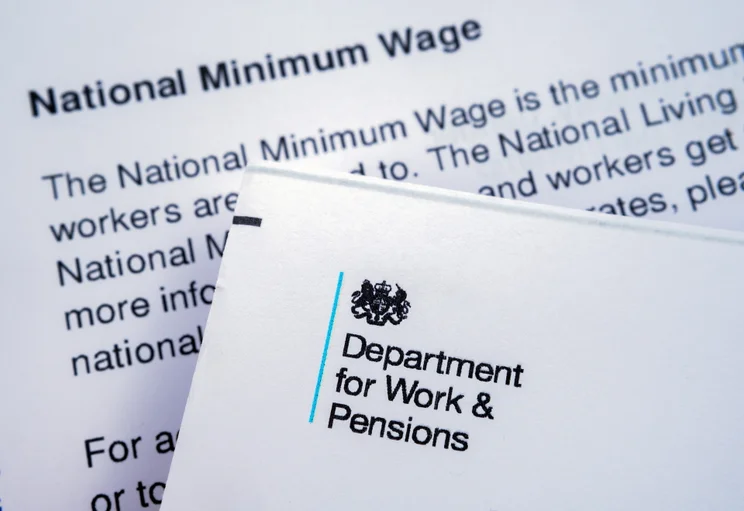
Britain’s largest business organisations have warned that Labour’s proposed above-inflation minimum wage rises could push employers past breaking point, with many businesses still reeling from the 4.1% increase that was introduced in April of this year.
This comes as the Low Pay Commission (LPC) indicated it would recommend a rise of up to 5% in 2027, with a central estimate that would outpace inflation by roughly 3.7%
Business experts claim that outcomes of this potential hike, combined with the government’s plans to scrap minimum wage age bands for younger workers, could lead to costs being passed onto consumers and entry-level workers facing more barriers to employment, along with small firms being squeezed.
Above-inflation wage hikes could push more businesses into difficulty, BCC finds
The LPC, the independent body which helps to set the minimum wage, said it was likely to recommend a rise of up to 5% for April 2027.
The Confederation of British Industry (CBI) and the British Chambers of Commerce (BCC) have baulked at the suggestion. BCC deputy chief executive, Kate Shoesmith, told the Telegraph that “any further above-inflation increases to the national living wage will only tip more firms over the edge.”
She added that many employers have already reached the limit of what they could absorb, after a series of steep wage increases. To ease the burden on businesses, the BCC is pushing for a 2.4% rise next year, which would set the rate at £13.02 an hour, and is urging Labour to pause plans to get rid of lower minimum wage rates for younger workers.
Matthew Percival, the director of the CBI, shared these concerns.
“Recent increases in the National Living Wage have significantly outpaced productivity growth, at a time when firms are already dealing with rising energy prices, higher taxes and growing employment costs,” he told The Telegraph.
Fresh figures released by the BCC paint a similarly bleak picture of business confidence, with investment intentions reportedly at their weakest since the pandemic. One in ten firms said that this year’s 4.1% increase to £12.71 had already led them to make headcount cuts.
The wider ripple effects of the minimum wage hike
With businesses already contending with rising business rates, surging energy costs, and higher taxes, firms are feeling financial pressure from all sides. Smaller firms are among the most vulnerable, unable to absorb the extra costs of these changes easily.
For sectors like retail and hospitality, where a large share of the workforce is paid at or near minimum wage, even an increase of a few percentage points could translate to a noticeable price jump, especially for small independents who are only just breaking even or, in some cases, already operating at a loss.
Labour’s plans to phase out lower minimum wage rates for under-21s have also been criticised amid concerns over youth unemployment, which has climbed to its highest level in over a decade.
Cressida Hogg, chairwoman of the CBI, argues that youth rates exist for a reason, as taking on young, less experienced workers often demands more training and support than hiring someone with more experience.
She warned that scrapping the current rates would disincentivise businesses from giving young workers opportunities, ultimately resulting in more young people being locked out of work altogether.
The policy isn’t criticised universally, however. The LPC, for instance, maintains that the recent National Living Wage increases “have not had a significant negative impact on unemployment”.
This chimes with research from the Organisation for Economic Co-operation and Development, which has found little evidence that moderate increases in minimum wages lead to higher youth unemployment, especially when changes are introduced gradually, and during periods of strong labour demand. The BCC and CBI would, of course, retort that labour demand is currently weak, and changes are being introduced too hastily.
How small businesses can brace for the 2027 wage rise
The new minimum wage won’t be confirmed until later this year, but there are steps businesses can take to start preparing for the changes today, to avoid breaching compliance and getting named and shamed by the government in 2027.
No hard figures have been confirmed, but running the current estimate of £13.18 an hour on your payroll now, and factoring knock-on effects like higher National Insurance contributions, will give you a clearer picture of your personnel costs come April.
It’s also wise to look at pricing strategically. If you need to pass some of the cost down to consumers to protect your bottom line, plan the timing and messaging carefully rather than making sudden changes. This could involve staggering price rises or bundling them in with stock changes, all while being as transparent as possible with your customer base.
To avoid redundancies or slashing staff hours, exploring government support schemes is another sensible step. The Employment Allowance, for example, lets eligible employers reduce their annual employer National Insurance bill by up to £10,500, which could offer a valuable lifeline to smaller businesses.
Apprenticeship funding and grants for hiring out-of-work young people are also available to many businesses, and can help offset the cost of training younger or less experienced staff at a time when young people are facing disproportionate barriers when it comes to entering the world of work.
Ultimately, there’s no silver bullet for offsetting the cost of another above-inflation rise. Yet, revising your strategy and looking into available support now will place businesses in a far stronger position than those left scrambling to adjust when the new rate lands next April.


