
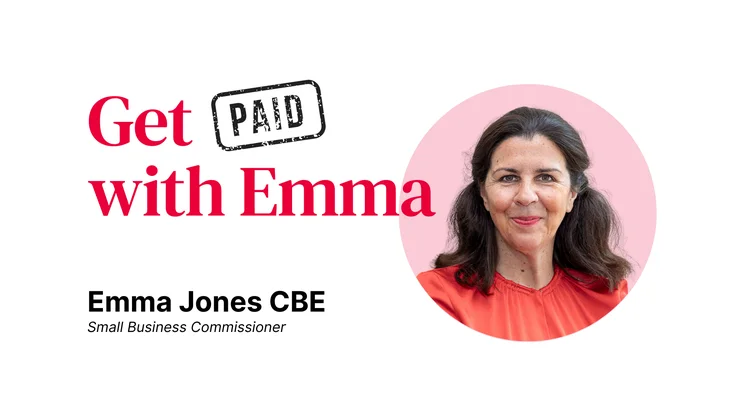
In an exclusive column, Emma Jones CBE discusses her work tackling late payment practices, offering practical insights to help small businesses get paid what they’re owed.
You’re a small business. You’ve delivered the work agreed with your corporate customer, sent the invoice and then… you wait. Then you wait some more.
For many small businesses, this has become the cost of doing business: being treated as a source of free credit by larger customers. Long payment terms might suit a corporate’s cash flow, but they put real pressure on the businesses at the other end of the supply chain.
And that pressure is not theoretical. It’s wages, rent, materials and marketing spend. It’s the confidence to make another hire or take on your next customer. When payment terms stretch to 90, 120 days or even longer, growth becomes harder.
Recruitment gets delayed, investment is held back, and far too much time is spent chasing invoices rather than serving customers.
If we expect SMEs to drive growth, innovation and jobs in the UK, we must end this unhealthy dynamic where smaller suppliers act as a bank for their larger customers.
That’s why one of the most important proposals in the Commercial Payments Bill is a 60-day maximum payment term. The aim is simple: if you’ve done the work, you should have certainty about when you’ll be paid.
Clear maximum payment terms will:
- Set a fairer baseline for everyone
- Stop small businesses being used as a source of credit by larger customers
- Free founders to focus on growth rather than the admin of chasing unpaid invoices
Smart businesses already get this. Fair Payment Code awardees understand that prompt payment is an investment in their suppliers: it enables investment in products and services, builds loyalty and creates healthier business relationships.
- Get ready for the Commercial Payments Bill: Understand your rights and see what it could mean for your business with the Small Business Commissioner’s Commercial Payments Bill guidance.
- Secure a better deal: There’s no need to wait to improve your payment terms. See the Commissioner’s guidance on how to negotiate a good contract.
- Want to hire but can’t stretch to it, or feeling the squeeze of legal costs? A grant could ease the pressure. From training support to cash for growth, our guide rounds up the small business grants you can apply for, and how to go about it.
Find a grant for your business

Emma Jones CBE – Small Business Commissioner
Emma Jones advocates for SMEs in the UK, ensuring they receive the resources they need to grow. With a degree in Law and Japanese, Emma has spent the last 25 years founding and leading multiple ventures, including Enterprise Nation and StartUp Britain, before being appointed as the Small Business Commissioner for the Department for Business and Trade in June 2025.
This content is contributed by a guest author. Startups.co.uk / MVF does not endorse or take responsibility for any views, advice, analysis or claims made within this post.

