
We list the best prices and packages from the UK’s top business electricity suppliers for SMEs.
Startups.co.uk is reader supported – we may earn a commission from our recommendations, at no extra cost to you and without impacting our editorial impartiality.
With the energy price cap rise in January, small businesses are looking for the best electricity rates to keep costs down. If your business is one of these, we recommend our top-rated small business energy supplier Octopus Energy and its No Standing Charge Tariff.
Energy prices have remained flat over the last few months, and gas prices have dropped slightly in the beginning of 2026. Global instability, however, can mean more volatility for energy prices in 2026, so locking in a fixed rate deal now is a buffer against price fluctuations in the near future.
Startups has been advising small businesses for 25 years, honing our ability to identify the right energy suppliers — the ones that are genuinely helpful for SMEs. In this article, we’ve analysed the best electricity suppliers (and why they’re the best), what businesses should look for in a supplier, how to understand your business electricity bill, and how to switch business electricity suppliers when the time comes.
- We recommend Octopus’s No Standing Charge tariff for small businesses because you’ll only pay for the electricity you use.
- Smartest Energy is a great choice for sustainable businesses because of its 100% renewable gas and electricity.
- Off-peak tariffs can save you money if you’re operating outside of standard hours.
- Switching business energy suppliers can save you money, especially if you’re not on a fixed tariff.
- It’s important to compare several suppliers and get quotes from each one so you know you’re getting the best deal.
In this article, we’ll cover:
The best electricity suppliers for small businesses in the UK
We compare and contrast the key features and set charges of each provider, so you can find the one with the most competitive rates, reliable supply, and flexible payment structure.
|
Best for
|
Unit rate (pence per day)*
|
Standing charge (pence per day)*
|
||
|---|---|---|---|---|
 |
 |
 |
 |
 |
|
Octopus Energy |
Utilita
|
EDF Energy |
SmartestEnergy
|
Valda Energy
|
|
Choice of tariffs
|
Small retailer and hair salons
|
Businesses in the service sector
|
Businesses focusing on sustainability
|
Lowest costs
|
|
62.91
|
72.61
|
75 |
49.5
|
44
|
*Costs were collected by Startups.co.uk in January 2026, and are based on a one-year fixed rate tariff for a business based in North London and using 48,000 kWh of energy per year. All pricing is estimated and subject to your business location and energy usage.
Octopus Energy: best for choice of tariffs
Octopus Energy offers the widest variety of tariffs to suit the needs of all manner of SMEs. Recently, it introduced what it calls the UK’s first dynamic tariff, Shape Shifters, which comes in two formats: Agile and Trio.
Businesses with intermittent energy usage should consider Agile. With this tariff, prices change every 30 minutes to match wholesale electricity costs. Octopus Energy lists the upcoming rates for the day on its Shape Shifter Portal, which allows businesses to plan ahead and adjust their energy usage to when energy is cheapest. According to Octopus Energy, this allows businesses to unlock massive savings.
The second Shape Shifters format is Trio, which focuses on businesses with EVs, low-carbon tech, or limited peak-time consumption that want to be less hands-on with their energy usage. Trio has three fixed rates (night, day, and peak) offering lower electricity rates outside of a 4pm-7pm window.
Outside of these Shape Shifter tariffs, Octopus Energy offers fixed-term contracts for businesses who prefer price certainty. Currently, businesses can lock in one, two, or three-year fixed terms contracts with Octopus Energy.
- Users can contact the company via a wide array of help channels including email, social media, and a 24/7 helpline
- Octopus has been made a Which? Recommended Provider for business energy in 2023, 2024, and 2025 thanks to its top customer service
- All Octopus Energy tariffs are 100% carbon-free
- Which? rated Octopus low for its smart meter installation targets (a provider like Utilita is better-known for having a smooth and speedy meter installation process)
- Advance payment is a requirement for all contracts
How much do Octopus Energy electricity rates cost?
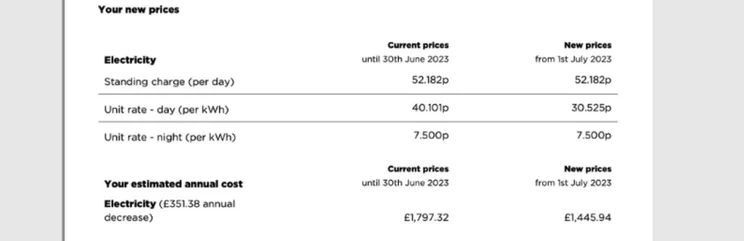
Based on a one-year fixed tariff for a business in London using 48,000 kWh annually, Octopus Energy quoted us 22.83p per kWh, and 62.91p for the daily standing charge. The rates Octopus Energy quotes for the two Shape Shifters tariffs were:
- Agile – 20.5p per kWh and 58.24p daily standing charge
- Trio – Average night rate (12-7am): 18.9p per kWh, average day rate (7am-4pm, 7pm-12am): 20.5p per kWh, average peak rate (4-7pm): 39.4p per kWh, and 48.9p daily standing charge
Which Octopus Energy tariff is best for small business?
It depends on what your business wants. For consistency, a fixed-term contract is best and as you can see above, Octopus Energy’s fixed rates are very reasonable.
However, businesses that are able to adapt their electricity usage to different times of the day should seriously consider one of the two Shape Shifters tariffs. Unit rates for Trio for example, can be among the lowest (if not the lowest around), and with Agile, Octopus Energy reckons three in four businesses can cut their energy bills by up to 25%.
Energy costs and locked-in high rate contracts have been a business survival issue for several years now, even more so after the recent nuclear levy bombshell dropped. Whilst the government has offered some free expert advice and audits on how to cut both costs and carbon emissions, its scope has been limited to only 600 small and medium-sized hospitality businesses. I’d encourage business owners to look at the immediate, practical and often overlooked ways to reduce energy use in commercial spaces – from smart meter data analysis, to infrared heaters and small-scale staff incentive schemes.

Utilita: best for small retailers and hair salons
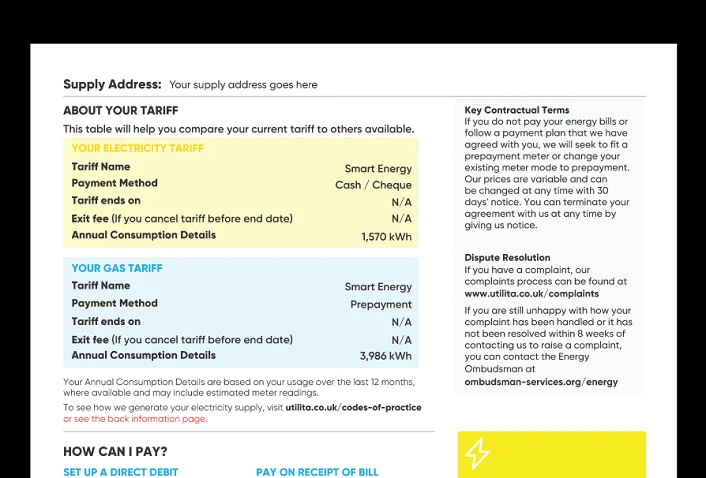
SMEs using between 15,000 kWh and 35,000 kWh per year should consider Utilita and its reliable fixed-term contracts. Businesses will know exactly how much they’re paying for a fixed term and in today’s current volatile energy market, securing a fixed rate is the best way to avoid unexpected price hikes. Plus, it allows for better budget planning.
Utilita also puts an emphasis on data insights for managing consumption, as smart meters can track exact electricity usage down to your next tea break. The company’s Smart Energy Monitor software (built into the smart meter) lets you:
- Monitor electricity usage in real-time and identify any spikes or areas for reduction
- View current and past energy bills
- Set daily or weekly energy consumption targets
- Display your energy usage in pounds – helpful for budgeting
- Receive a ‘Smart Score’ (a measurement of how energy efficient you are)
- Has physical energy hubs with dedicated Energy Experts in nine UK locations including Derby, Leicester, Sheffield, and the Isle of Wight
- Focuses on SMEs using between 15,000 kWh and 35,000 kWh
- Utilita makes it simple for businesses to track their energy usage patterns with smart meters
- No green tariff is available. Utilita encourages smart meter use for energy efficiency
- Utilita’s customer service team is only available during working hours
How much do Utilita’s electricity rates cost?
Based on a one-year fixed tariff for a business in London using 48,000 kWh annually, Utilita quoted us 21.99p per kWh, and 72.61p for the daily standing charge. Utilita made a point to highlight that its pricing is created on a bespoke basis, with each rate tailored to individual businesses.
Which Utilita tariff is best for small businesses?
A fixed-rate tariff is going to be the best option for most businesses switching to Utilita, as it’ll make it easier to plan budgets and avoid the volatility of the energy market.
EDF Energy: best for businesses in the service sector
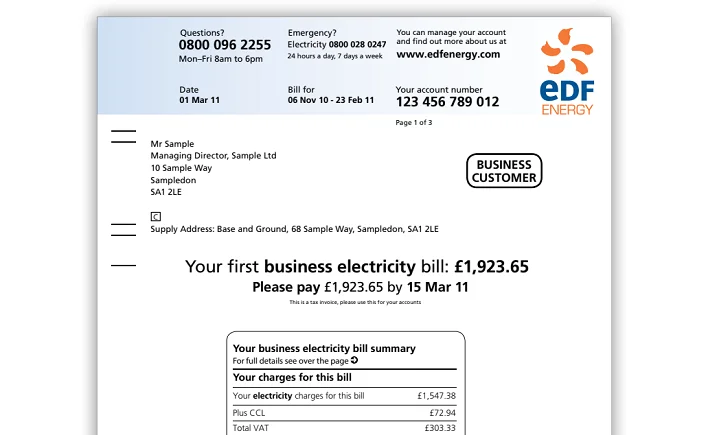
Businesses in the service sector will struggle to find better support than that offered by EDF. Its support is available 24/7, which is ideal for businesses in need of a completely reliable electricity supply. These include:
- Offices in charge of sensitive customer data (e.g. accountants or mortgage brokers)
- Health or medical clinics with concerns about reliability and meeting regulations
- Education and training services looking to avoid any disruptions to lessons/lectures, which could frustrate students or corporate clients
EDF supplements its support with Kraken, an AI tool which provides basic customer assistance and ensures power outages are resolved quickly to minimise business disruption.
- EDF is one of the largest business energy suppliers in the UK
- SMEs can benefit from longer fixed-term contracts for a small added fee
- EDF offers zero standing charge on some fixed-term tariffs
- Tariffs with standing chargers had higher daily fees than other providers listed here
- EDF doesn’t rank highly for sustainability, compared to other providers (such as Octopus Energy)
How much do EDF Energy’s electricity rates cost?
Based on a one-year fixed tariff for a business in London using 48,000 kWh annually, EDF Energy quoted us 23.6p per kWh and a standing charge of 75p. The high standing charge makes it a poor choice for companies with low electricity usage.
Which EDF Energy tariff is best for small businesses?
EDF Energy’s Super Saver Tariff is its standard for SME businesses. The tariff offers fixed prices for one, two, and three years, and comes with the option of paying a monthly standing charge (instead of daily).
For businesses with a low energy consumption, EDF Energy’s Energy Saver Tariff is a good option. It has no standing charges, but slightly higher electricity costs per kWh, so businesses using less electricity will find this a cost-effective choice.
SmartestEnergy: best for sustainable businesses
SmartestEnergy is a great choice for businesses valuing sustainability. The company supplies 100% renewable electricity and gas to businesses (both SMEs and large businesses), providing this through flexible and fixed tariffs.
Businesses can also benefit from SmartestEnergy’s sustainability consulting and its customer service will help with setting and reaching any net-zero goals. SmartestEnergy provides access to its SmartWeb service, too, which gives detailed breakdowns of electricity consumption.
- 100% renewable energy helps SMEs reduce carbon emissions and better reach net-zero goals
- SmartestEnergy has helped over 100,000 SMEs get access to competitive tariffs focused on sustainability
- You can lock in rates for one, two, three, four, or five years with the SmartFix tariff
- The SmartFix Zero tariff offers no standing charges and is great for seasonal businesses or businesses consuming under 25,000 kWh per year
- Some customers report less than positive experiences with SmartestEnergy’s customer service
- A few businesses reported inaccurate billing
How much do SmartestEnergy electricity rates cost?
Based on a one-year fixed tariff for a business in London using 48,000 kWh annually, SmartestEnergy quoted us 24.8p per kWh, and 49.5p for the daily standing charge.
Which SmartestEnergy tariff is best for small businesses?
The SmartFix Renewable tariff is best for small businesses that value sustainability as an important metric. With it, businesses get fixed energy rates for one, two, three, or four years — and all electricity comes from 100% renewable sources (solar, wind, and hydro power).
Valda Energy: cheapest small business electricity supplier
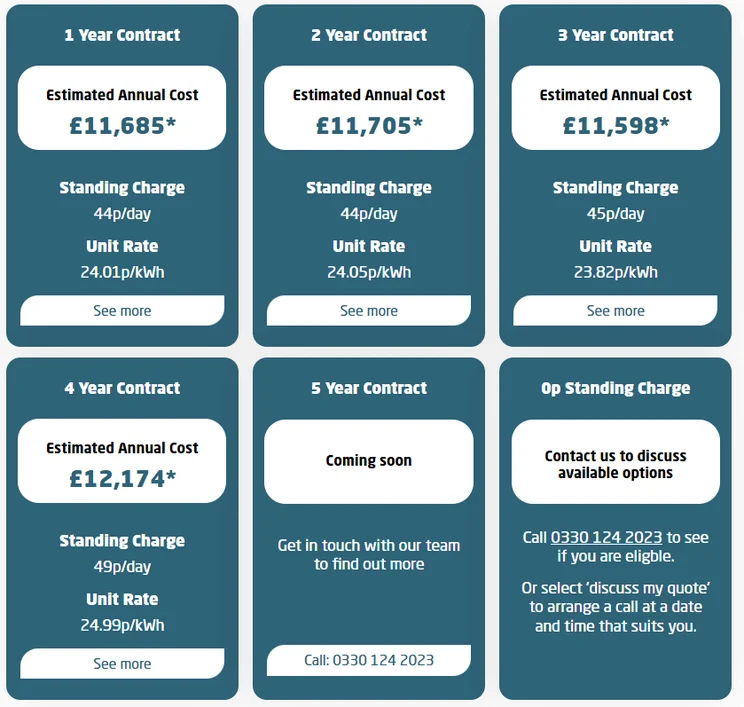
Valda Energy currently offers the lowest electricity rates for SMEs (when factoring in its low standing charge). Saving money is always important for businesses and with energy prices still not dipping below pre-pandemic levels, finding a cheap energy supplier is an attractive prospect.
But not if it means opting for a lower quality service.
Thankfully, Valda Energy supplies cheap electricity while maintaining a genuinely impressive 4.4 out of 5 on Trustpilot (as of January 2026). It does this by focusing on SMEs instead of larger businesses, allowing it to streamline its processes and pass on these savings.
What’s great about Valda Energy is that it is, itself, an SME, so the team behind it understands what it’s like to juggle finances to pay for energy bills. The supplier is relatively new to the market, starting in 2019, but has grown rapidly to become a key business energy supplier.
- The lowest standing charge for fixed-term tariffs we could find
- Some tariffs, such as SmartChoice Zero, have no standing charges at all
- Valda Energy specialises in serving SMEs
- Currently supports nearly 50,000 businesses
- Has only operated since 2019, so not as well established as its competitors
- Valda Energy’s SmartChoice Zero tariff (no standing charge) isn’t available to microbusinesses consuming less than 5,000 kWh per year
How much do Valda Energy electricity rates cost?
Based on a one-year fixed tariff for a business in London using 48,000 kWh annually, Valda Energy quoted us 24.01p per kWh, and 44p for the daily standing charge.
Which Valda Energy tariff is best for small businesses?
We recommend the Valda SmartChoice for small businesses, as its low cost per kWh and low daily standing charge will help businesses keep energy bills down.
For businesses with low electricity usage, the SmartChoice Zero tariff has no standing charge and makes sure businesses only pay for the energy they use. The price per kWh is higher with this tariff, so it’s not ideal for businesses with high electricity usage.
What to look for in a business electricity supplier
The sheer volume of electricity suppliers vying for attention can make it difficult for businesses to know which one is right for them. Comparing plans is a good place to start, but knowing what to look for will make this process easier.
Many different factors will affect whether a supplier fits a business’s needs, and there’s no one-size-fits-all approach to getting the best rate. We’ve created a list below with a few essential factors to consider when looking for a new electricity supplier:
1. Price
What a business will pay for a tariff is a huge consideration, but it’s not always as black and white as cheaper = better. Rather, a business should consider what they need in a tariff first and foremost. Sometimes, a more expensive tariff could provide options such as 24/7 support, which may be essential for businesses handling sensitive data that can’t afford to lose power for any length of time.
If a business is just looking for the cheapest tariff, comparing unit rates and standing charges is important. Some suppliers might offer lower unit rates, but the standing charges could mean a business ends up paying more overall. Also, it’s a good idea to take note of any hidden fees (installation costs, late payments, and/or maintenance charges) and the length of a contract.
2. Customer service
Choosing a supplier known for efficient, responsive support channels is a good way to mitigate against potential problems in the future. Businesses will want suppliers who can quickly resolve issues.
3. Business needs
Every business is different, and that means that what they need from a supplier is unique to them. As a result, when considering which business electricity supplier to choose, here are two business-specific factors you should consider:
- Size – some suppliers offer more flexibility, shorter contract lengths, or zero exit fees for new businesses or microbusinesses. Contacting sales representatives directly to ask about startup discounts can sometimes also lead to money off your bill.
- Consumption – time-of-use tariffs offer discounts for using electricity during off-peak hours. For example, a bakery whose main operations (ovens, mixers) are concentrated in the early mornings with minimal electricity use during the day can save money with a time-of-use tariff.
4. Green tariffs
Wind and solar are the UK’s greenest, and now cheapest, sources of electricity thanks to the increasing wholesale costs of crude oil. These might even exempt you from the Climate Change Levy (CCL).
The best suppliers for green energy are SmartestEnergy and Octopus Energy, who both provide 100% carbon-free tariffs. Octopus Energy also has an ‘Electric Match’ feature, which provides time-matching, allowing you to trace back the time and source of your green energy.
Octopus Energy also has its Power Panel solar export tariff. If a business has solar panels, this will allow them to sell the energy they produce via them back to the grid. Octopus Energy will give businesses 12p per kilowatt-hour of electricity exported.
Maximilian Schwerdtfeger, Deputy Editor at The Eco Experts, gives his opinion on green tariffs for businesses:
Even if you don’t see huge savings straight away from your green tariff, by choosing one you’re taking steps to future-proof your bills. Clean energy is going to get cheaper in the future as the government is legally bound to its zero-emissions strategy, which will make green tariffs the standard for households and businesses. In her 2025 Budget Chancellor Rachel Reeves announced she was removing certain green levies from electricity bills, a move which should bring down bills and accelerate the uptake of clean technology such as heat pumps.

5. Add-ons and extras
Even if their upfront costs are high, suppliers with add-ons that save time and money – such as a mobile app (for easy access to managing and paying your energy bill) – can provide more value for money in the long run than a ‘budget’ provider.
6. Business energy meters
There is a big shift towards businesses using smart meters for tracking energy usage, instead of traditional meters that require businesses to provide a manual energy reading. Smart meters are quickly becoming the most popular type of meter. They come with several benefits – for one, they communicate data directly to suppliers, so there’s no need for manual readings or third parties.
Smart meters also give businesses a much closer look at energy consumption, so they can adjust energy usage accordingly.
How to understand your business electricity bill
Small businesses pay between £200 and £600 per month for their electricity bill, on average. However, the rate will differ depending on key factors such as:
- Team size
- Industry specialisation
- Location
- Energy contract
Electricity bills can be lengthy and full of legalese. Below, we break down the charges and terms that typically appear on a business electricity bill, so you can determine if you’re getting a competitive deal with a provider:
1. Business tariff
An energy tariff is essentially the type of contract you’ll be on for your business electricity use. There are two main types: fixed rate and variable. Or three, if you consider Octopus Energy’s new ‘dynamic tariff.
Knowing which tariff you’re on – or want to be on – can save you a lot of money. Here are the key differences between the two:
- Fixed tariffs. With a fixed tariff, the unit price remains the same for a set period (usually less than five years), regardless of how the market rate changes.Fixed tariffs are suitable for several types of businesses, but they offer the most benefit to those with consistent operating hours and minimal fluctuations in energy use like offices, corner shops, and hair salons.
- Flexible / variable tariffs. With this tariff, unit prices fluctuate alongside the energy market. Variable tariffs are usually short-term, so businesses have greater freedom to switch suppliers when needed.Variable tariffs are most suitable for companies with seasonal peaks and troughs in energy consumption, like factories that operate more machinery during specific times or leisure facilities with busier weekends.
No business should choose to be out-of-contract. If this happens, businesses are automatically put onto expensive deemed/out-of-contract tariffs. Estimates suggest they can double or even quadruple the average market rate.
If you’ve just moved into a new premises or your existing contract has ended, move from out-of-contract to a fixed or variable tariff as soon as you can.
2. Energy usage charges
Every business electricity bill will contain the following charges relating to energy usage and tax requirements:
- Unit cost: measured in kWh (kilowatt hours), this is the amount paid per unit of electricity used by your business. This is often the most prominent figure on your bill
- Standing charge: a daily fee charged regardless of energy use on that day. Since April 2024, Ofgem has been exploring how to reduce domestic standing charges. However, so far, business charges have been left out of the conversation
- Climate Change Levy (CCL): a tax on electricity bills designed to encourage businesses to reduce their carbon emissions
- VAT (Value Added Tax): a tax applied to most goods and services in the UK, including business energy bills. The current rate is 20%
3. Hidden fees
The below fees tend not to appear on business electricity bills despite being a part of your supplier’s package. This lack of transparency makes it difficult for SMEs to accurately budget and avoid unexpected charges.
It’s a smart move to shop around for a supplier that shares upfront information about the following fees. You might even find an electricity firm that doesn’t charge any:
- Installation costs: charges associated with the installation, maintenance, and reading of your electricity meter
- Late payment fees: a charge for those who don’t settle their business electricity bill on time
- Smart meter charges: a fixed daily charge if you have a smart meter installed at your premises
When should I switch business electricity suppliers?
There isn’t always a right time to switch electricity suppliers – businesses should look out for opportunities that make switching worth it, instead. Some factors suggesting a business should switch include:
- Energy usage has decreased: if your business is using considerably less electricity, switching to a tariff that benefits from this can save money. Tariffs with no standing charges are particularly good in this instance – the price per kWh is typically higher, but as you’re using less electricity overall, you can save money by avoiding a costly daily standing charge.
- When you’re out of contract: if you’re out of contract, you should switch immediately because your business will be on a deemed/out-of-contract tariff, which will be much more expensive than other tariffs.
- When your contract is up for renewal: suppliers will let you know when your contract is up for renewal. During this window, it’s a good idea to compare rates from other suppliers and see if you can get a better deal elsewhere as renewal rates are often more expensive than switching to someone new. Consider a fixed-rate tariff and lock in a better rate.
Summary
Picking a business electricity supplier doesn’t have to be daunting, but it does have to take into account what your business’s specific needs are. If saving money is your number one priority, picking Valda Energy is a great option.
Alternatively, Octopus Energy is the most flexible supplier in terms of available tariffs, and if you can lock in a good fixed rate, is close to being as cheap as Valda Energy. Keep in mind that all suppliers listed here could offer different rates to what we were quoted, and you might find you get lower rates with a supplier not covered in this article.
Consider what your business needs when picking a tariff. Intermittent electricity usage? Tariffs with no standing charges are ideal here. Need 24/7 assistance? Pick a supplier known for its excellent customer support (EDF Energy was our pick here).
Frequently Asked Questions
There’s technically no single ‘cheapest’ supplier for small businesses, as it will depend entirely on your specific scenario: but based on the cost information we collected in 2026, Valda Energy provided the lowest rates (when factoring in the low standing charge). Octopus Energy’s No Standing Charge (NSC) tariff may prove cheaper for businesses’ with low or varying consumption.
There are typically quite significant differences between the rates for commercial premises and domestic businesses: the domestic energy rate is 5% VAT, whereas the standard energy rate for commercial premises is 20% VAT (some businesses may potentially qualify for a lower rate). Businesses might also be subject to additional costs like the Climate Change Levy (CCL).
Startups.co.uk is reader-supported. If you make a purchase through the links on our site, we may earn a commission from the retailers of the products we have reviewed. This helps Startups.co.uk to provide free reviews for our readers. It has no additional cost to you, and never affects the editorial independence of our reviews.


